
Moving a Fridge Freezer: Defrosting, Delivery and Switching It On
October 11, 2026
Emptying the fridge is only one part of getting it ready to move. You also need time to defrost and dry it, deal with any water connection, and check how the manufacturer says it should travel. Find the model label before making the schedule.
Keep the food plan separate from the appliance delivery. If the fridge cannot be restarted immediately at the new home, you still need a workable evening meal and suitable storage for anything chilled. Use the checklist below to organise the preparation, carrying route and installation handover for your house move.
1. Identify the exact appliance before planning the move
Photograph the model label and locate the manufacturer’s current instructions. Check transport orientation, removable parts, defrosting and any waiting period before switching on. Save the document somewhere accessible and give relevant instructions to the people preparing and transporting the appliance.
Record whether it is freestanding, integrated, unusually tall or connected to a water supply. An integrated appliance may require appropriate help to release it from cabinetry. Do not assume that a removal team can perform plumbing or fitted-kitchen work unless those tasks have been expressly agreed.
Write a preparation record such as “F01, freestanding fridge freezer; model confirmed; water connection present; disconnection help still to arrange”. This makes unfinished tasks visible. A brand name alone is not enough to establish the instructions for every model.
2. Make a food plan before emptying the appliance
Review what you expect to use before moving day and avoid unnecessary new purchases. Decide which items can be consumed, which need suitable temperature-controlled transport, and which should not be taken. Keep this decision separate from booking the appliance’s transport.
Use the Food Standards Agency’s chilling guidance for refrigerated food and follow product storage instructions. If you cannot maintain suitable conditions, do not rely on an ordinary removal vehicle as a substitute fridge. Ask for appropriate food-safety advice where needed.
For example, a household with a long collection-to-delivery gap should not plan dinner around frozen food arriving ready to eat. Arrange the evening meal independently. This reduces pressure to restart the appliance before its manufacturer’s instructions allow.
Fridge restart: follow the maker’s sequence
| Stage | Check before proceeding |
|---|---|
| Prepare | Identify the model and read its transport instructions. |
| Defrost and dry | Complete the required preparation and secure loose internal parts. |
| Transport | Confirm the permitted orientation and handling plan. |
| Restart | Follow the manufacturer’s settling and switching-on instructions; there is no universal waiting time. |
3. Schedule defrosting and drying with enough preparation time
Follow the appliance’s manual for turning it off, emptying it and managing defrost water. Allow the time its condition and instructions require rather than choosing a universal deadline from another person’s move. A freezer with accumulated ice may need different preparation from a recently maintained model.
Protect the surrounding floor and arrange appropriate help if the appliance cannot be safely accessed. Do not chip ice with a sharp tool or improvise a heating method. Follow the manufacturer’s process and ask its support team if you cannot find clear instructions.
Check the interior, drawers and drainage areas for residual water before protective materials are applied. Make drying a recorded task, not an assumption. Explain to the collection team if preparation is incomplete so they can assess the situation before loading.
4. Agree disconnection and the handling of loose parts
Where water or other connections are involved, appoint a competent person to prepare them and address the old property’s supply safely. Confirm who will do the corresponding installation at the destination. Transport and installation are different responsibilities.
Read the manual’s instructions for drawers, shelves and loose fittings before wrapping the cabinet. If parts travel separately, label the package with the fridge’s item code and add it to the load count. Photograph existing cabinet marks while they are visible. Tell the person receiving the appliance where the parts and instructions are, so installation does not start with a search through kitchen boxes.
Prepare a short parts list: “F01 appliance; F01A protected shelf package; instructions held by receiving person”. Use your real package count. Avoid putting unrelated hard objects inside the cabinet to save carton space unless the manufacturer and agreed handling method permit it.
Fridge move: finish each stage before starting the next
Identify
Find the exact model and its transport instructions.
Empty and prepare
Plan food, defrosting, drying and any disconnection.
Move
Use the assessed route and agreed handling method.
Restart
Follow the model’s settling and installation instructions.
5. Measure the appliance and both access routes
Record height, width and depth, including handles and any projections. Measure the clear doorway openings, stairs, turns and lift at collection and delivery. Photograph the narrow points and explain the distance between the likely loading position and the kitchen.
Ask whether doors or handles can be removed according to the model’s instructions and who would undertake that work. Do not start removing unfamiliar fittings simply to make a measurement look more favourable. For a large appliance, the space needed to turn may matter as much as doorway width.
If the destination is upstairs, say so before requesting a quotation. Identify lift restrictions and building permissions. An appliance fitting through the entrance does not prove that it can be handled safely around the next landing.
6. Confirm transport orientation before collection
Bosch UK’s transport guidance favours keeping a fridge upright and describes additional considerations when an appliance has been laid on its side. Use the exact model’s instructions to agree the appropriate method; do not treat one manufacturer’s general advice as a rule for every fridge freezer.
Share the instructions with the provider before the job is confirmed. If the proposed route or vehicle arrangement cannot accommodate the required handling, resolve that before collection. Do not make an unsuitable method the only option by leaving the conversation until the appliance is outside.
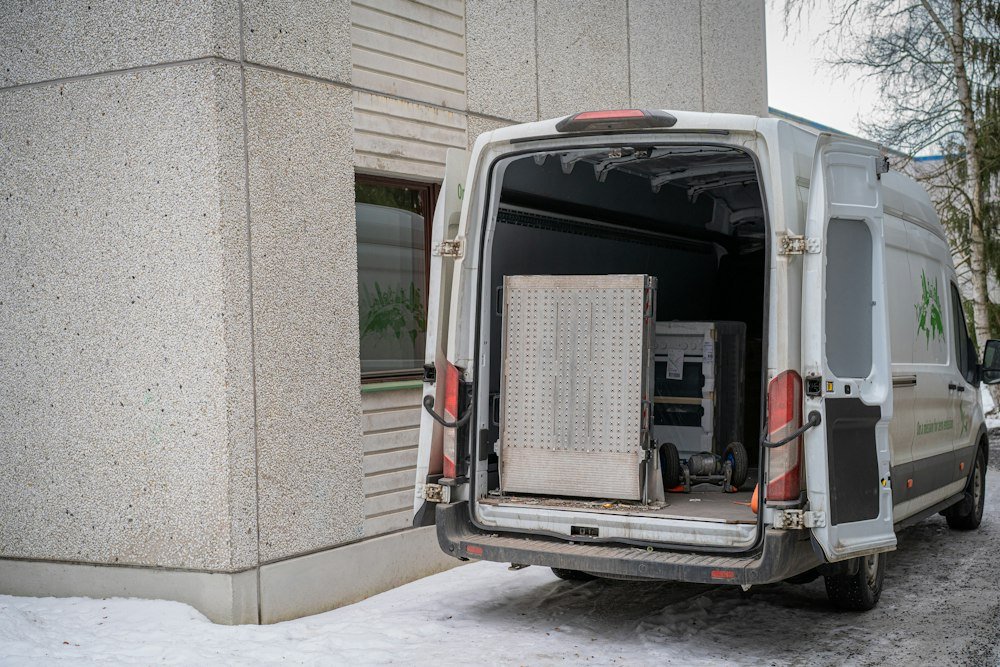
7. Prepare the new position and restart handover
Check that the intended location suits the appliance’s dimensions, ventilation requirements and connections. Clear the route and agree where it will wait if installation is separate. Keep the manual and parts package available to the receiving person.
Record how the appliance travelled and pass that information to the person responsible for restart. Follow the model’s settling, positioning and installation instructions. Do not borrow a waiting period from an unrelated appliance or switch it on immediately because the household needs somewhere for food.
Inspect the delivered cabinet and components against your record. Raise any visible issue through the agreed reporting process. Keep the preparation and delivery notes until the installation handover has been completed.
Common mistakes
- Leaving food decisions until the fridge must be emptied.
- Assuming a transport booking includes water disconnection.
- Using a universal defrost or restart time.
- Forgetting shelf packages and water accessories.
- Checking the kitchen doorway but overlooking stair turns.
Final preparation checklist
- Exact model and manual located.
- Food handled under an appropriate separate plan.
- Defrosting and drying completed as instructed.
- Connections and installation responsibilities agreed.
- Loose parts labelled and counted.
- Both routes assessed and transport method confirmed.
- Restart instructions handed to the receiving person.
Frequently asked questions
Can the appliance travel on its side?
Check the exact model and discuss the proposed handling with the provider. Do not assume every fridge freezer permits the same orientation.
How soon can I switch it on?
Use the manufacturer’s instructions and the actual transport circumstances. A single waiting time does not answer the question for every appliance.
What should I send with my enquiry?
Send model details, dimensions, connection information and access photographs through ComfortVan’s contact page. Identify any preparation task that remains unconfirmed.